
Frequently asked questions about Siamese cats in Chile
Born of heritage, raised for a lifetime
Here we answer what families from all over Chile ask us about Siamese cats and about Casa Siam: which homes suit them, how to prepare your home, their temperament and their health. The rest, how to reserve and when and how kittens go home, we discuss with each family on WhatsApp.
Casa Siam
Where to buy a Siamese cat in Santiago?
From a breeder who raises the cats in a family environment, shows you the parents’ health records and how the kittens grow up, and puts the reservation in writing. Casa Siam is a breeder of modern Siamese cats in Las Condes, Santiago, Chile. We raise our cats in a family environment and welcome families by appointment. The first step is a message on WhatsApp. How Casa Siam began is told in our story.
What determines the value of a breeder-raised Siamese?
What lies behind each kitten. At Casa Siam, the parents live with us and follow a veterinary medical protocol, with cytopathology records. Each kitten goes home with its microchip, its first vaccine and its deworming recorded in its health record, and the family receives a guide for the first days and our support. The reservation is set down in writing in a Protocol.
We discuss the value of each litter on WhatsApp, together with the dates when the kittens go home. Our litters are announced on our Siamese kitten litters page.
Does Casa Siam give away kittens or offer them for adoption?
No. At Casa Siam there is no adoption; there is the reservation of a breeder-raised cat, with its Protocol in writing. Adoption is the path for rescued cats, and we value it: if your family is not looking for a Siamese in particular, we recommend visiting the shelters and rescue groups in your area first. If you are looking for a modern Siamese with documented health records, the path is a reservation.
How can I tell if Casa Siam is a trustworthy breeder?
In four ways, and all four can be checked. First, our Google reviews: they are all there, including the ones that are not five stars. Second, the paperwork: the parents’ health records, with their negative FeLV, FIV and PKD1 tests, and the Reservation and Handover Protocol, which puts every commitment in writing and which every family receives when the reservation is formalized. Third, our Instagram profile, @casasiam.cl, which carries the verification badge. And fourth, the voice of those who already live with a cat from Casa Siam, in the family reviews. We are pioneers in doing it this way: in a family environment, with few cats and with everything in plain sight.
Where is Casa Siam, and how do I get there?
In Las Condes, Santiago, Chile, with our business address at Los Militares 5620. We welcome visitors by appointment: in-person visits and pickups are arranged on WhatsApp, and the exact address is confirmed to each family when the date is set. All the ways to reach us are on our Contact page.
Is a Siamese right for us?
What kind of home is a Siamese cat right for?
A Siamese can be a good companion for people who enjoy an engaged, curious and usually vocal cat, and who can give it time every day. It is worth considering how much company it will have, what chances it will have to play and how its rest will be respected. The breed points to certain tendencies; each cat’s own character also counts. Source: TICA.
I have never had a cat: can a Siamese be my first cat?
Yes, as long as you understand its needs and are willing to learn. Before choosing, it is worth planning daily care, the budget and its care during trips or workdays. You should also consider whether you would rather raise a kitten or live with an adult cat whose character is already better known. Previous experience helps, but preparation and a good fit with your routine are essential. Source: Cats Protection.
Can a Siamese live well in a small apartment?
Yes, as long as it has company and play: the Siamese is a good breed for an apartment, even a small one. It is a medium-sized indoor cat that adapts well when the space allows it to rest, hide, scratch, climb and play safely. More than the square metres, what matters is how the apartment is set up: sturdy high perches, scratching posts, quiet spots and safety netting on windows and balconies. What it copes with poorly is long periods alone and boredom, and a large home does not make up for a lack of attention. It is also a talkative cat: worth knowing before you reserve. Source: Cats Protection.
I work away from home all day: is a Siamese right for me?
It is something worth discussing before deciding. A newly arrived kitten should not spend whole days alone: in its first weeks it needs company and someone to keep an eye on it. An adult Siamese can be left home alone for a working day, but it copes poorly with long periods of solitude and seeks a good deal of interaction. Consider the actual hours you spend away from home, including commuting, and who will be able to keep it company while it settles in; toys or an automatic feeder do not meet those needs on their own. For families who work away from home all day, we recommend taking home two Siamese, ideally from the same litter, and enriching the home with high perches, scratching posts and toys; we discuss this with each family before reserving. Sources: GCCF, Cats Protection.
I work from home: does that mean I can care for a kitten properly?
Being at home can make settling in easier, but it is worth checking how much time you can really give it. Meetings and busy workdays also require planning feeding, play and supervision. Set up safe places where the kitten can rest and keep itself busy while you work. Your routine should allow for both the time you spend together and the times when it will be without your direct attention. Source: Cats Protection.
Why does Casa Siam prefer families to take home two Siamese?
Because the Siamese copes poorly with being alone: it is a sociable cat that seeks company and play throughout the day, and two Siamese that grow up together keep each other company when the family is out: they play, sleep together, learn from each other and, between them, burn off energy that a cat on its own tends to take out on people or the house. That is why, when a family can care well for two, we prefer them to take home two, ideally from the same litter, since they already know each other. It is not a condition for reserving, nor does it replace the family’s attention: two cats still need time, play, space and a budget for each one, and the relationship between them matters. We talk it over with each family before they reserve. Sources: Cats Protection, TICA.
We have young children: is a Siamese kitten a good fit?
It can be, but it is not a given: it depends on each child and on the cat’s character, and it requires supervision and arrangements that protect both. A kitten is fragile and needs to be able to sleep, eat and retreat without being chased or picked up against its will. The adults in the home must take charge of its care and teach respectful interaction. It is worth considering the children’s ages, the atmosphere at home and the cat’s temperament. We support each family through that stage with a guide and by being available. Source: Cats Protection.
If there is also a dog, see We have a dog: will a Siamese get along with it?
We have a dog: will a Siamese get along with it?
Breed alone cannot ensure it. What matters is both animals’ past experiences and, above all, how the dog responds to cats. The arrival calls for separate spaces, gradual introductions and supervision, with the option of taking a step back if the kitten gets scared or the dog gets agitated. The cat must be able to move away and take refuge without being chased. If the dog chases cats or cannot stay calm around them, it is best to assess whether they can live together, with professional help, before bringing a kitten home. We support each family through that stage with a guide and by being available. Source: Cats Protection.
My cat is older and calm: would a Siamese kitten be good company for it?
Not necessarily. A kitten’s energy can be exhausting for a cat that wants rest. Before deciding, consider the health and character of the cat that already lives with you, and its experience of living with other animals. If you bring a kitten home, you will need a gradual introduction, separate resources and places where the adult can rest without interruption. Friendship should not be taken for granted. Source: Cats Protection.
We want a quiet, very independent cat: is a Siamese a good choice?
It is worth considering other options. A Siamese tends to be expressive, active and close to its people. Individual cats differ, but it would not be wise to choose one expecting it to stay quiet or seek little interaction. Before reserving, think about whether you would enjoy a cat that takes part in everyday life and may often ask for attention. Source: GCCF.
Giving a Siamese as a gift and bringing it home
Can a Siamese kitten be a Christmas gift?
Yes, when the person who will live with the kitten wants it and takes part in the decision. A Siamese lives between 15 and 20 years and becomes very attached to its family, so we do not recommend a surprise. What works well is to announce it at Christmas, with photos of the litter, and to pick the kitten up together when it is ready, at around two months of age.
If the litter is born in late October, that moment comes between Christmas and early January. Christmas is an estimate: the date is set by each kitten’s development and the attending veterinarian, not by the calendar. The dates for each litter are on our Siamese kitten litters page.
Can a Siamese kitten be a Children’s Day gift?
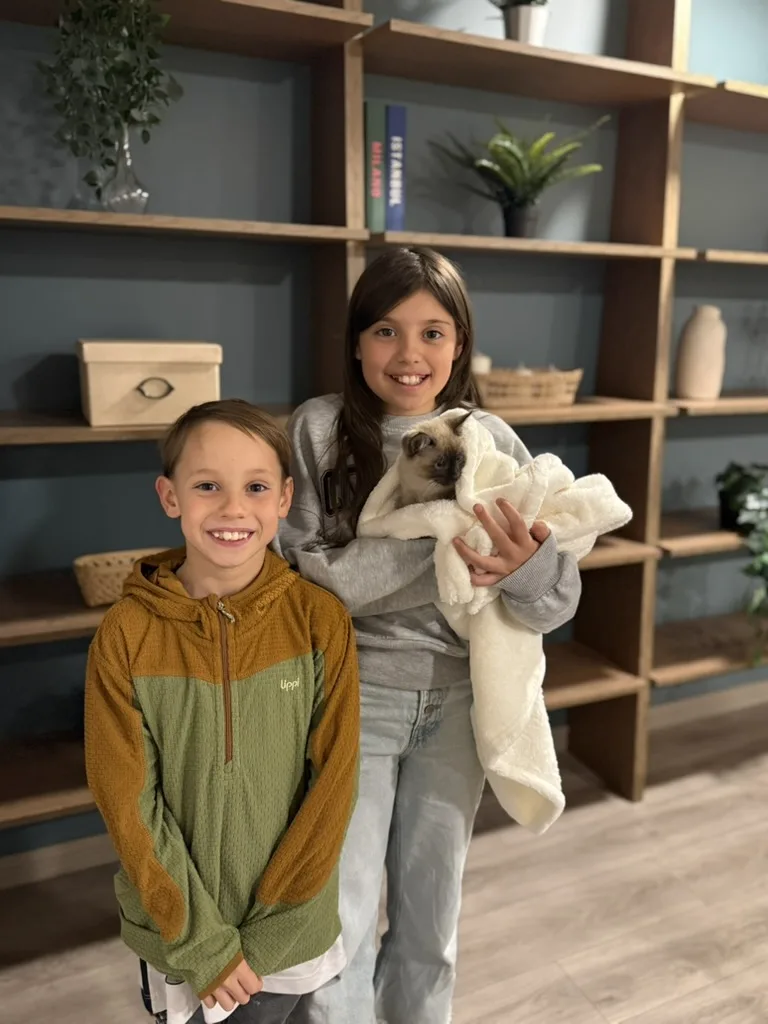
Yes, when the whole family wants it and the adults take charge of its care. The kitten belongs to the family, not just the child: a Siamese lives between 15 and 20 years and needs a grown-up to look after its food, health and routine. That is why we do not recommend a surprise.
What works well is to tell the child on their day, with photos of the litter, and to pick the kitten up together when it is ready, at around two months of age. In Chile, Children’s Day is celebrated on the second Sunday of August: to arrive close to that date, the kitten would need to be born around June. Ask us about the litters of those months; the date is set by each kitten’s development and the attending veterinarian, not by the calendar.
If there are young children at home, also read We have young children: is a Siamese kitten a good fit?
At what age does a Siamese kitten go home?
At around two months, but there is no fixed date: each kitten goes home when its development and the attending veterinarian show it is ready, and not before. That is why dates such as Christmas or Children’s Day are always an estimate.
Before leaving, each kitten receives its microchip, its first vaccine and its deworming, all recorded in its health record, and the family receives a guide for the first days. The final color is confirmed in writing, with photos, at around five or six weeks.
The birth dates of each litter are on our Siamese kitten litters page, and what the first night at home is like is in Where does a two-month-old kitten sleep, and what is its first night like?
What should we have ready at home before the kitten arrives?
The basics, before pickup:
- a quiet space for the first days, with a bed or a hideaway;
- a litter box with litter;
- bowls for water and food;
- the same food it was eating at Casa Siam: ask us which one before pickup;
- a carrier for the trip;
- a scratching post;
- safety netting on windows and balconies, because a curious Siamese climbs and leans out.
It is also a good idea to have chosen your veterinarian. For the first weeks, until vaccinations are complete, we recommend home-visit veterinary care.
What care does a Siamese kitten need in its first days at home?
A quiet space for the first days, the same food it was eating at Casa Siam (which the family can change gradually later, if they wish), a litter box and water within reach, and unhurried introductions to the other people and animals in the home. Each family receives a guide covering all this and can message us at any time.
Where does a two-month-old kitten sleep, and what is its first night like?
In the same quiet space as the first days, with its bed, water and litter box a few steps away. It is normal for it to meow on the first night: it misses its mother and littermates. It helps if it has somewhere to hide and someone from the family stays close, without taking it out of its space or forcing it to come out. Over the following days it will start to explore the house on its own.
What is the 3-3-3 rule for cats?
It is a popular guideline that comes from adopting rescued cats. It speaks of three days for the cat to calm down, three weeks to learn the household routine and three months to feel at home. It is not a scientific rule, but it helps you be patient. A kitten raised in a family environment and socialized from its first weeks usually settles in sooner. Even so, we recommend two weeks without going outdoors and, until vaccinations are complete, home-visit veterinary care.
If we go on vacation in January or February, what do we do with the kitten?
Ideally, the kitten should arrive when the family will be at home. The first weeks are for settling in, checkups and booster vaccinations, and a newly arrived kitten is better off not being left in someone else’s care or moving house again. If your trip is already planned, it is best to discuss it before reserving and choose a litter whose go-home date fits, or agree on a later pickup. For later trips, a Siamese usually copes better with staying at home, with someone trusted visiting every day, than with a change of surroundings.
How do I protect a Siamese kitten from summer heat?
With fresh water in more than one place, shade and a well-ventilated room during the hottest hours. Never leave it in a car or in a carrier in the sun, not even for a few minutes. A kitten dehydrates quickly: if it stops eating, drinks less or seems listless, contact your attending veterinarian promptly; do not wait for the day to pass.
What can I give my cat for Christmas, and what should I avoid?
What a Siamese appreciates most is time and play: a feather wand, a tall scratching post or a shelf by a netted window. At this time of year, avoid:
- ribbons, string, tinsel and small tree ornaments, which it could swallow;
- the cords of string lights;
- lilies in flower arrangements, which are highly toxic to cats;
- leftovers from dinner.
If you suspect it has swallowed something, go to the veterinarian right away.
How do I protect my kitten from New Year’s fireworks?
Keep it in an interior room with the windows closed and the curtains drawn, with its bed, litter box, water and someone from the family nearby. Do not take it out or force it to leave its hiding place, and do not pick it up if it resists. Do not give it sedatives or drops unless your veterinarian prescribes them.
Health and documents
Are the parent cats healthy and documented?
Yes. Our breeding cats live with us and follow a veterinary medical protocol, with cytopathology records. They are free of mites: their ear cytology shows a normal level of microorganisms for the ear. Every litter is born and raised in a family environment, with its mother.
Does the kitten need to be registered in the National Pet Registry?
Yes. Chile’s Law 21,020 on responsible pet ownership requires dogs and cats to be registered in the National Pet Registry (Registro Nacional de Mascotas). Every kitten leaves Casa Siam with its microchip, and we guide each family through registering it with that number. Source: ChileAtiende.
How long do Siamese cats live?
With good nutrition, veterinary checkups and an indoor life, a Siamese usually lives between 15 and 20 years. It is a long-term decision, which is why we prefer to talk things through calmly before any reservation.
Do Siamese cats shed a lot? Are they suitable for people with allergies?
The Siamese has a short, fine coat with no dense undercoat, and it sheds less than most breeds. No breed is hypoallergenic: allergies are caused by a protein in saliva and skin, not by the hair, so shedding less does not prevent allergies. If someone in the family is allergic, the first step is to consult the health professional who treats that allergy before deciding; a visit to Casa Siam is a way to get to know each other, but it cannot predict how that person will react over time.
Looks and colors
What is the modern Siamese, and how is it different from the traditional one?
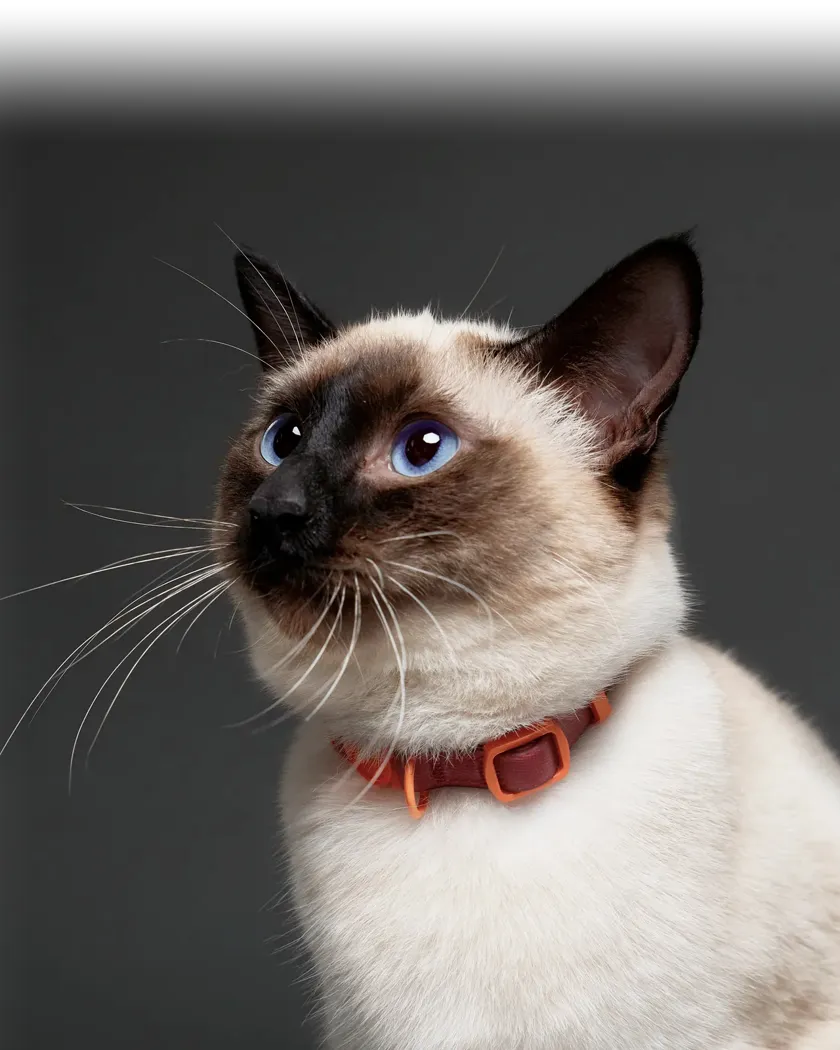
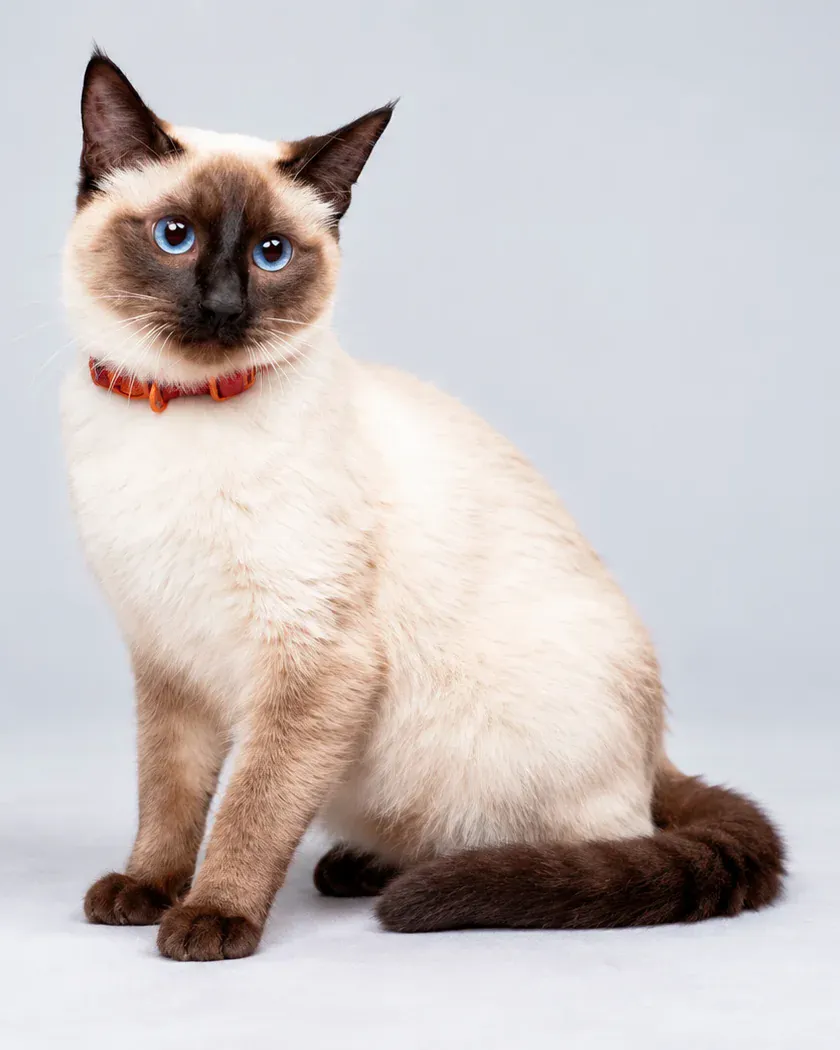
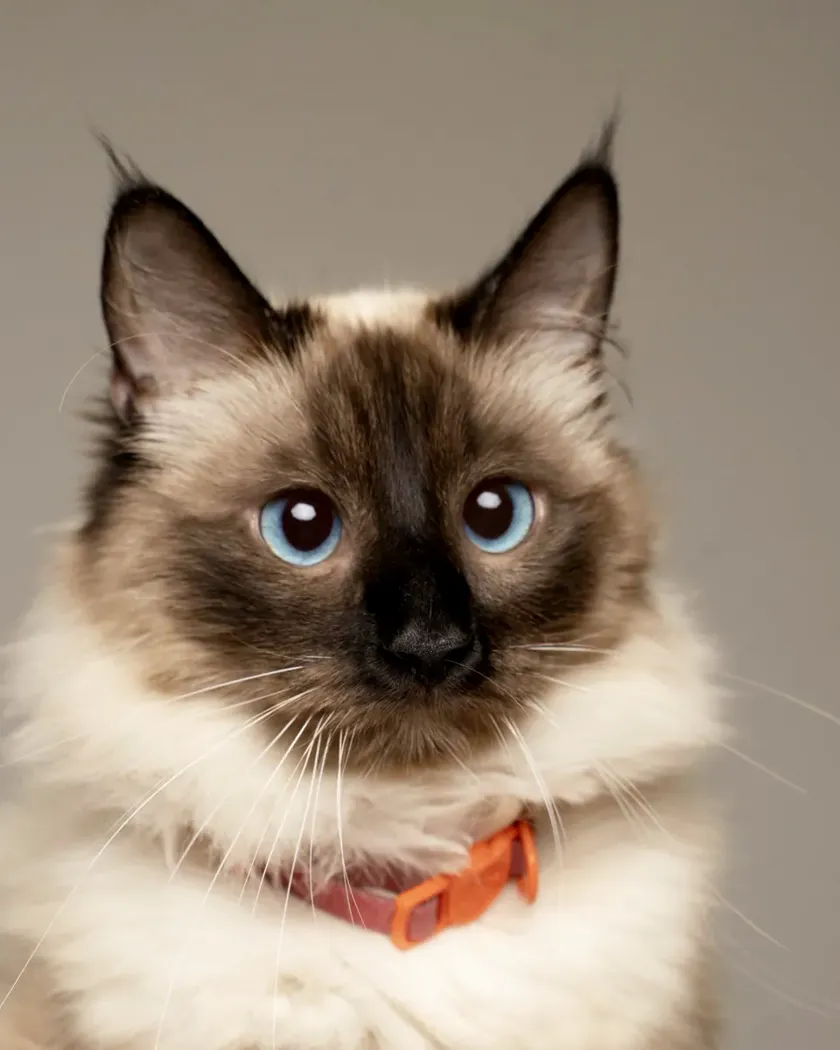
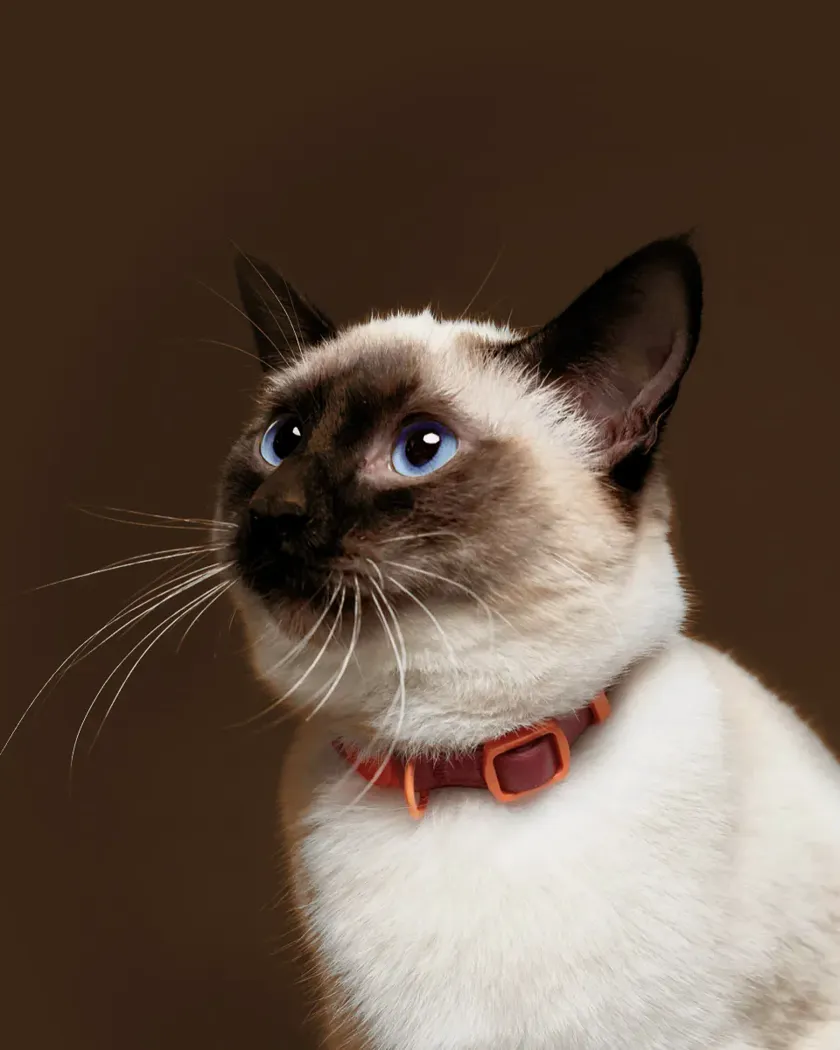
It is the Siamese line that follows the current breed standard: a long, slender body, a wedge-shaped head, large ears that continue the line of the face and almond-shaped eyes of an intense blue. The traditional Siamese, or Thai, keeps the rounder head and more compact body of the old-style Siamese. Casa Siam breeds modern Siamese.
What colors do Siamese cats come in, and which does Casa Siam breed?
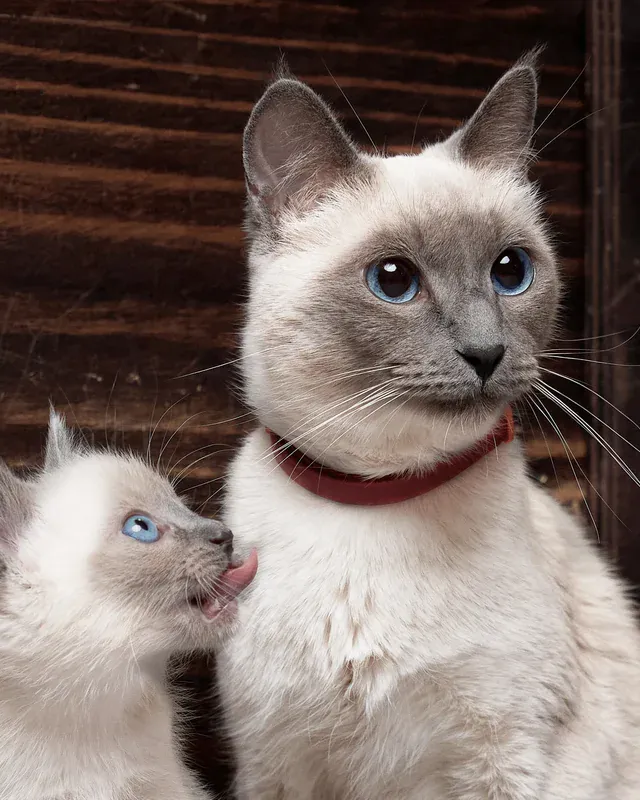
The four classic varieties are seal point, blue point, chocolate point and lilac point: the mask, ears, legs and tail carry the color, and the body is pale. Most Casa Siam litters are seal point and blue point, with chocolate point depending on the pairing. Each kitten’s final color is confirmed in writing, with photos, at around five or six weeks.
Why do Siamese cats change color or get darker?
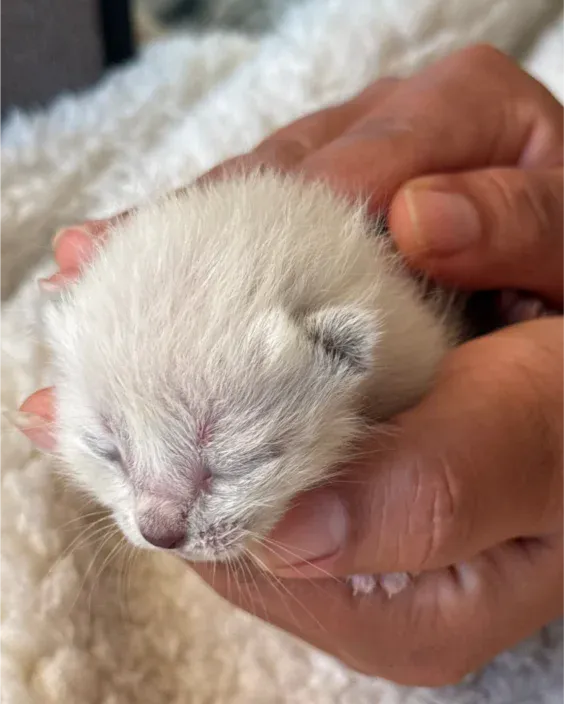
Because their color depends on temperature. The Siamese carries a variant of tyrosinase, the enzyme that produces pigment, which does not work at normal body temperature and is only active in the coolest areas: ears, mask, legs and tail. That is why kittens are born almost white and their points appear in the first weeks, and why the body darkens with age and in cold weather. It is also why the color is only confirmed in writing at around five or six weeks.
Do Siamese cats always have blue eyes?
Yes. The blue eye color comes from the same gene that produces the points, and the breed standard requires it in every color. A cat with a Siamese-like coat and green or yellow eyes is not a purebred Siamese, although it may have one among its ancestors.
Why are some Siamese cross-eyed?
Because the same genetic variant that produces the points alters the connections between the eyes and the brain. Early Siamese were often cross-eyed. Today breeders consider it a fault, and selection has made it uncommon.
Is there a long-haired Siamese?
Yes, but it is recognized as a separate breed: the Balinese, the long-haired variety of the Siamese. The Siamese has a short, fine coat, and it is the only breed Casa Siam raises in our Siamese kitten litters.
The Siamese character
Where does the Siamese cat come from?
From Thailand, the former Kingdom of Siam, which gives it its name. It appears in the Tamra Maew, old Thai manuscripts of poems about cats, and today’s breed was developed from those cats from the late nineteenth century onward. It does not have Egyptian origins.
What is the Siamese cat’s personality like?
The Siamese is one of the most sociable and talkative cats: it seeks out people, follows its family around the house, vocalizes with a distinctive voice and asks for company. It is active, curious and intelligent, and it bonds strongly with the people it lives with. That is why we socialize every kitten from its first weeks, in a family environment and in daily contact with us.
What is special about the Siamese cat?
A combination that sets it apart: the pointed pattern, with color concentrated on the mask, ears, legs and tail, which it shares with other breeds of Siamese origin; blue eyes, part of the breed standard; and a talkative nature, attached to people, that makes it closer to a dog than to most cats. It is also one of the oldest known breeds.
Do Siamese cats meow a lot?
Yes: the Siamese is one of the most vocal breeds, with a low, distinctive voice. It talks to ask for company, to say hello and to tell you what is going on. It is part of its charm and worth knowing before you reserve: a family looking for a quiet cat should think it over; one that enjoys conversation will appreciate it.
See also We want a quiet, very independent cat: is a Siamese a good choice?
Are Siamese cats jealous or aggressive?
The Siamese tends to be attached: it follows its family, demands attention and can become jealous if it feels it is losing that attention, especially in homes with several animals. Aggressiveness is not a trait of the breed, but any cat can react badly to fear, pain or a forced introduction. With early socialization, unhurried introductions and daily play, that intensity usually turns into companionship. That is precisely why our kittens grow up in a family environment, in daily contact with people.